

New tire is a lanugo better?
Nov 20,2024
Zhongce car space
Car brother
See today's topic
Do you all have the same doubts?
Today, Brother Che, have a good talk.
tire hair is how to come?
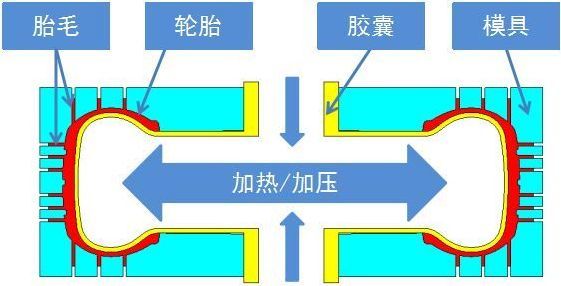
There is a key step in the general tire manufacturing process, called "vulcanization", which requires the unvulcanized tire to be placed in a mold at a specific temperature and vulcanized through a series of chemical reactions.
When the mold is closed and pressurized, the rubber compound squeezes the mold, forming the tread and sidewalls. On the tire processing mold, there are exhaust holes for discharging pressurized gas. When the tire is cooled and formed, part of the discharged rubber becomes what we commonly call "lanugo".
Is it good to have lanugo hair in a new tire?
It is true that many newly produced tires have fetal hair, but this does not mean that tires without fetal hair are second-hand tires and refurbishment tires. There are many manufacturers to optimize the production process, the "de-fetal hair", the use of the latest vent spring sleeve automatic removal of lanugo process, so that vulcanized tires can automatically be removed lanugo, all for the sake of beauty.

on those misconceptions of lanugo:
1, lanugo can increase grip wrong!
Imagine the tire surface is rougher, which is supposed to increase the grip. However, the lanugo hair is very slender and will gradually be worn away, and that point of friction is insignificant at all.
2. The longer the lanugo, the more wrong it is!
The length of the fetal hair depends on the equipment and process of making the tire, which is normal and has nothing to do with the quality of the tire.
3, lanugo will increase tire noise error!
Compared with the tire noise caused by the friction between the tire and the ground, the noise caused by the lanugo is minimal.

So, are the newer tires the better?
The internal molecules of the newly produced tires are unstable. In fact, the best loading time is 6 months to 1 year from the production date.
Previous article
Next article
Contact Information
Jinzhou Unical Tyre Co.,Ltd.

Address: No. 27A-301, Baoji Platinum Building, Central South Street, Taihe District, Jinzhou City, Liaoning Province
Hotline: 86-18841677776 86-416-3801508
WeChat Public Number